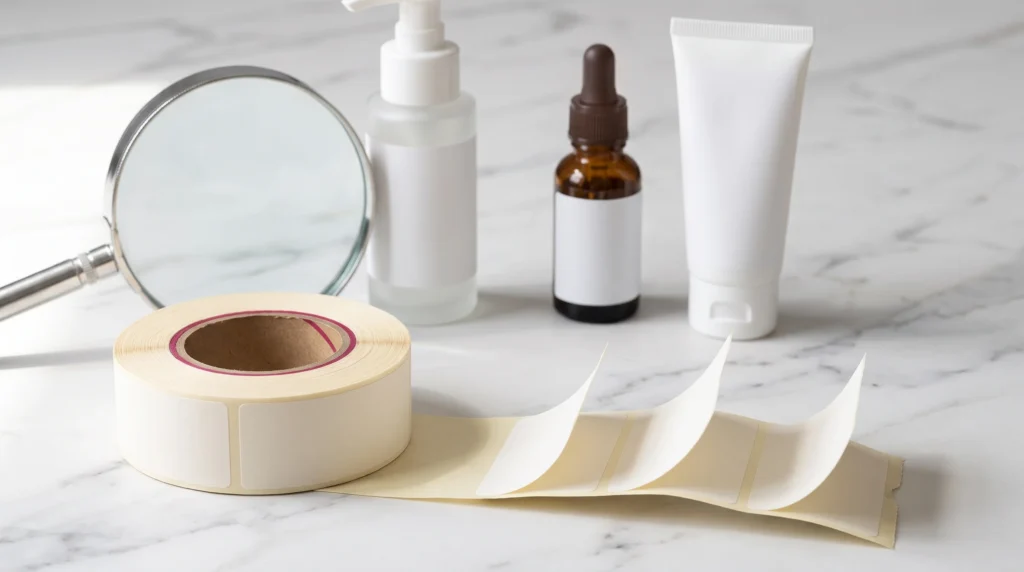
Label mistakes are one of the most common – and expensive – problems for new cosmetics brands, because they are discovered after packaging has been printed. Use this checklist when you brief your designer and before you approve artwork with your supplier.
The mandatory label items
Article 19 of the EU Cosmetics Regulation, mirrored in the UK Cosmetics Regulation, lists what must appear on the container and outer packaging:
| Item | What to print | Where |
|---|---|---|
| Responsible Person | Name and address (UK address for GB, EU address for the EU) | Container and outer pack |
| Country of origin | For imported products, e.g. “Made in the country of origin” | Container and outer pack |
| Nominal content | By weight or volume, e.g. 50 ml or 14 g | Container and outer pack |
| Durability | Best-before date or PAO symbol | Container and outer pack |
| Precautions | Warnings and special precautions | Container and outer pack |
| Batch number | Batch code or reference for identification | Container and outer pack |
| Function | Unless clear from the presentation | Container and outer pack |
| Ingredients | INCI list, preceded by “Ingredients” | At least the outer pack |
Very small products have some exceptions; check them with your safety assessor or Responsible Person.
Best-before date or period after opening?
- Durability of 30 months or less: print “best before the end of” with the date (month and year, or day, month and year), often shown with the hourglass symbol.
- Durability over 30 months: print the period after opening with the open jar symbol, for example 6M, 12M or 24M.
The durability is set in the safety assessment based on stability testing, so agree it before artwork is final.
Writing the INCI ingredient list
- Use INCI (International Nomenclature of Cosmetic Ingredients) names, e.g. Aqua, Glycerin, Niacinamide.
- List ingredients in descending order of weight; those under 1% may follow in any order.
- List colourants by CI number; ranges of shades may use “may contain” (+/-) – useful for make-up such as a cushion foundation shade range.
- Mark nanomaterials with “(nano)” after the name.
- Write fragrance as “Parfum” and list regulated fragrance allergens by name when they exceed the thresholds – the EU list of allergens has been greatly expanded, see fragrance allergen labelling.
Language rules
GB labels must be in English. In the EU each member state sets the language for consumer information. Spain requires the nominal content, durability date, precautions and function, among other items, in Spanish (Royal Decree 85/2018). Read more in selling cosmetics in the EU and Spain.
Claims on the label
Everything you print, including “dermatologically tested”, “SPF 50+” or “for sensitive skin”, is a claim that must be supported by evidence in your Product Information File. Avoid medical wording such as “treats acne” or “heals”. Sunscreen labels have extra rules; see our sunscreen guide.
Artwork checklist before you approve
- RP name and address correct for each market.
- “Made in the country of origin” (or the correct origin) shown.
- Content matches the actual fill.
- PAO or best-before agreed with the safety assessor.
- Warnings from the safety report included.
- Space reserved for the batch code.
- INCI list checked against the final formula.
- Required translations included.
- Barcode and recycling marks if your retailers need them.
Cosmebatch prints only the artwork you own and approve. When you plan the pack, see printing options to decide what goes on a label and what is printed directly.
Sources
- EUR-Lex – Regulation (EC) No 1223/2009, Article 19
- GOV.UK – Making cosmetic products available to consumers in Great Britain
- BOE – Real Decreto 85/2018, Article 6
General information, not legal advice. Confirm your final label with your Responsible Person or safety assessor.