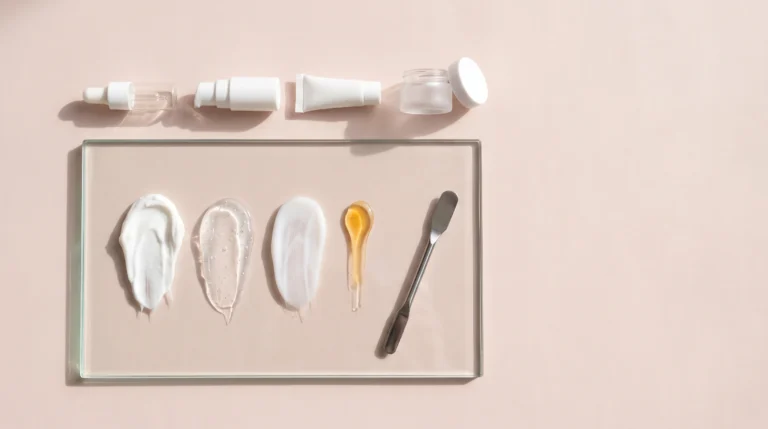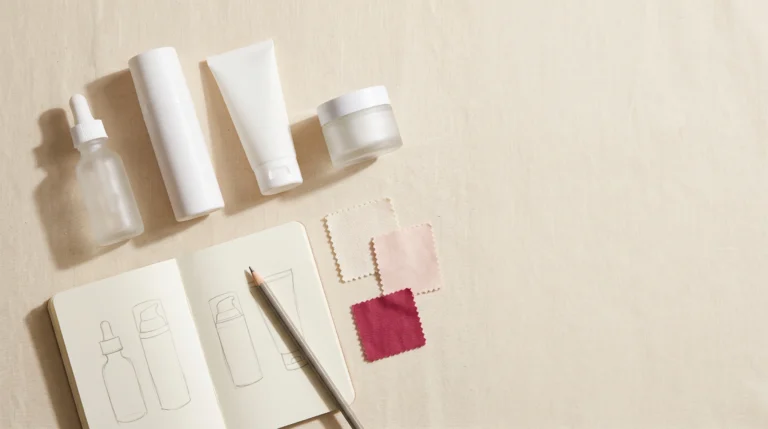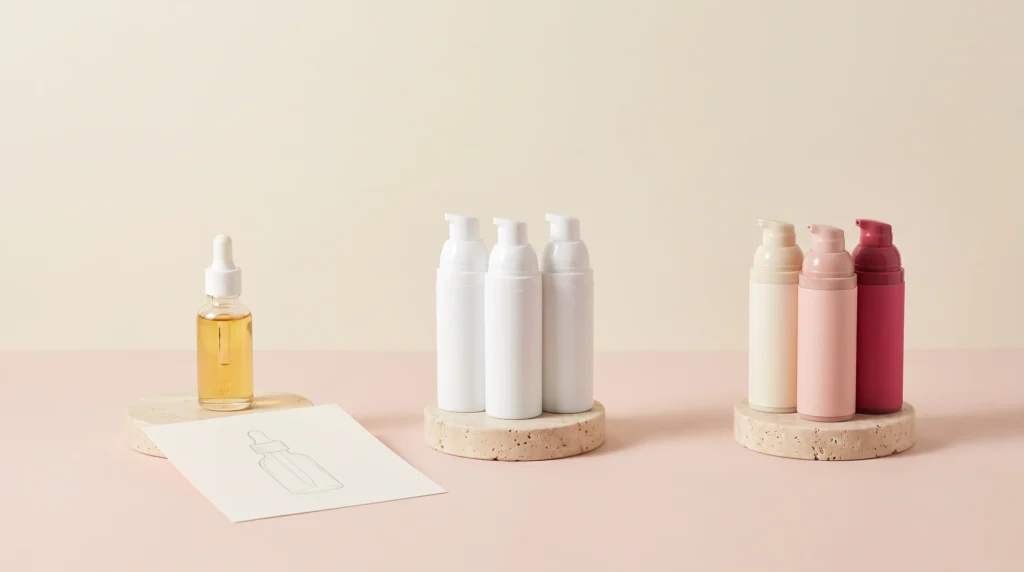
When you look for a supplier for your own cosmetics brand, you will see OEM, ODM, private label and white label used almost interchangeably. They are not the same, and the difference decides how unique your product is, how much it costs and how quickly you can launch.
The four models at a glance
| Model | Formula | Packaging and brand | Typical use |
|---|---|---|---|
| OEM (original equipment manufacturer) | Made to your specification or brief | Your design | Brands with a clear product idea |
| ODM (original design manufacturer) | Supplier’s existing formula, adjusted | Your brand, supplier’s or your packaging | Faster launches with some customisation |
| Private label | Existing product made for your brand | Your brand on the product | Small first orders, testing a market |
| White label | Standard product | Plain or generic label you brand | Lowest entry cost |
OEM: your product, made to your specification
In an OEM project you define the product: the type, effect, texture, scent, packaging and artwork. The supplier turns that into a formula and produces it. OEM gives the most control and the most distinctive product, but needs more input from you, more sample rounds and more time.
ODM: choose and adapt an existing formula
ODM suppliers have a library of tested formulas. You pick one – for example a niacinamide serum, a gel sunscreen or a colour-changing lip balm – and adapt details such as fragrance, colour or packaging. Because the formula already exists, development is shorter and the risk of surprises is lower.
Private label and white label: fastest to market
Private label puts your brand on a product that is already in production. White label goes one step further: the product is generic and only the label changes. Both are fast and cheap to start, but competitors may sell something very similar, so your brand, positioning and marketing have to do more of the work.
How Cosmebatch works: Custom OEM and Formula Development
We offer two routes. With Custom OEM we produce to your own design – artwork, packaging drawings, a reference sample or a detailed brief. With Formula Development you describe the type of product, the effect and texture you want and your target price, and a new formula is developed for your brand. Our product range shows packaging and formula types you can start from. In every case we only apply brand names, logos and artwork that you own; we do not copy any third-party brand.
Which model should you choose?
- Testing a market with a small budget: start from an existing formula and customise the packaging. A low MOQ matters more than a unique formula at this stage.
- Building a brand around a hero product: invest in formula development for that product and keep the rest of the range simpler.
- Selling in the UK or EU: whatever the model, you or your Responsible Person need the formula information for the safety assessment – make sure the supplier will share it. See UK rules and EU rules.
Questions to ask any supplier
- Is this an existing formula or developed for me?
- Who owns the formula, and is it exclusive to my brand?
- Will you share the full INCI formula with my safety assessor?
- What is the MOQ per product, per colour and per packaging design?
- What does a sample cost, and is it credited against the order? See how samples work.
For the full launch route, read how to start your own skincare line with an OEM supplier.